

Volume 11, Issue 4 (Winter 2026)
J Health Res Commun 2026, 11(4): 1-7 |
Back to browse issues page



Download citation:
BibTeX | RIS | EndNote | Medlars | ProCite | Reference Manager | RefWorks
Send citation to:


BibTeX | RIS | EndNote | Medlars | ProCite | Reference Manager | RefWorks
Send citation to:
Shirvani R, Taghaee F, Sajjadi S A, Farsi Z. Factors Affecting Professional Socialization in Nursing. J Health Res Commun 2026; 11 (4) :1-7
URL: http://jhc.mazums.ac.ir/article-1-1208-en.html
URL: http://jhc.mazums.ac.ir/article-1-1208-en.html


Research and Technology Department, Aja University of Medical Sciences, Tehran, Iran.
Full-Text [PDF 2357 kb]
(432 Downloads)
| Abstract (HTML) (624 Views)
Full-Text: (144 Views)
Dear Editor
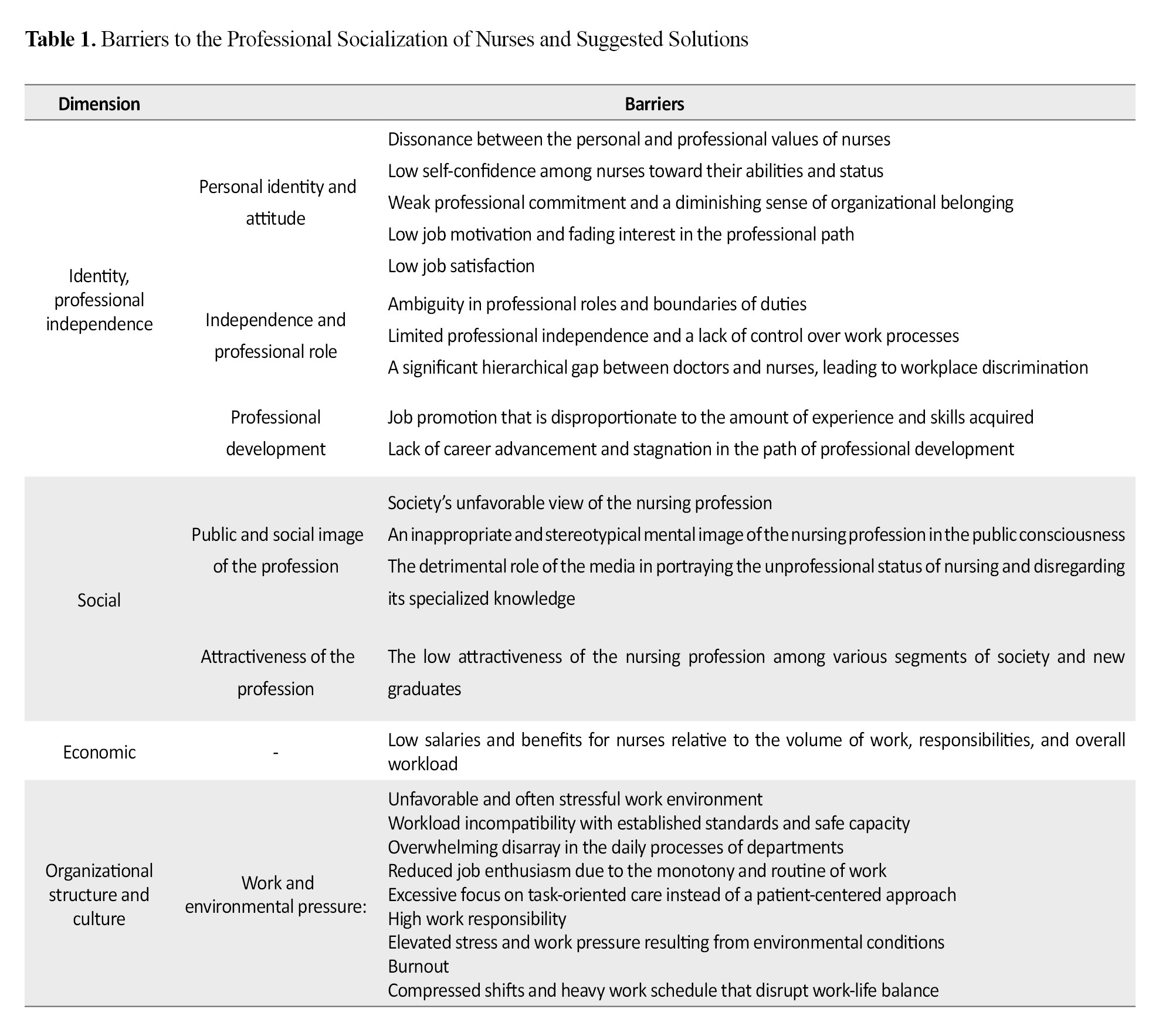
The process of socialization is one of the fundamental stages of human development, during which an individual learns the roles, values, and norms necessary for participation in social groups and organizations. This process begins in childhood with learning the rules and culture of the family and continues throughout life, ultimately leading to the formation and consolidation of the individual’s personality [1]. Meanwhile, professional socialization is a specific part of this overall process, during which an individual forms his or her professional identity by learning the knowledge, skills, attitudes, values, beliefs, and ethical standards related to the profession and becomes prepared to effectively perform professional roles [2]. In the nursing profession, professional socialization is a process through which nurses become familiar with their professional roles and responsibilities, internalize the values and goals of the profession, and gradually form a coherent professional identity [1]. It is a dynamic and ongoing process in the nursing profession and has no end [3]. The concept of socialization in the nursing literature dates back to 1958 and earlier [1]. Professional socialization is a vital aspect of the evolution of the nursing profession and serves as the starting point for nursing as a profession [3]. Socialization within the nursing profession has contributed to professional development and the expansion of nursing knowledge and is regarded as a major driver and significant factor influencing the advancement of the profession [4]. Successful realization of this process leads to the acquisition of professional identity and commitment, internalization of values and traditions, improvement in the quality of patient care, a positive professional image, promotion of job satisfaction, demonstration of professional behaviors, enhancement of professional decision-making power, and continuous dynamism within the nursing profession. In contrast, poor professional socialization can have serious consequences, such as reduced quality of care, a negative image of the profession, decreased job satisfaction, increased psychological stress, job abandonment, decreased productivity, and the weakening of ethical and professional values [4, 5]. Globally, the socialization of nurses faces numerous challenges, and the social status of nurses is often not very desirable. This indicates that the socialization process in nursing is not being effectively implemented and faces issues that require attention and targeted policymaking [6]. With the ongoing professionalization of nursing and the increasing need for competent nurses, the importance of professional socialization and the study of factors influencing it have gained more attention than ever before [5]. The most significant obstacles affecting this process exist within the dimensions of the educational system, workplace, and organizational, economic, social, professional, and cultural identity contexts (Table 1) [5-7] .
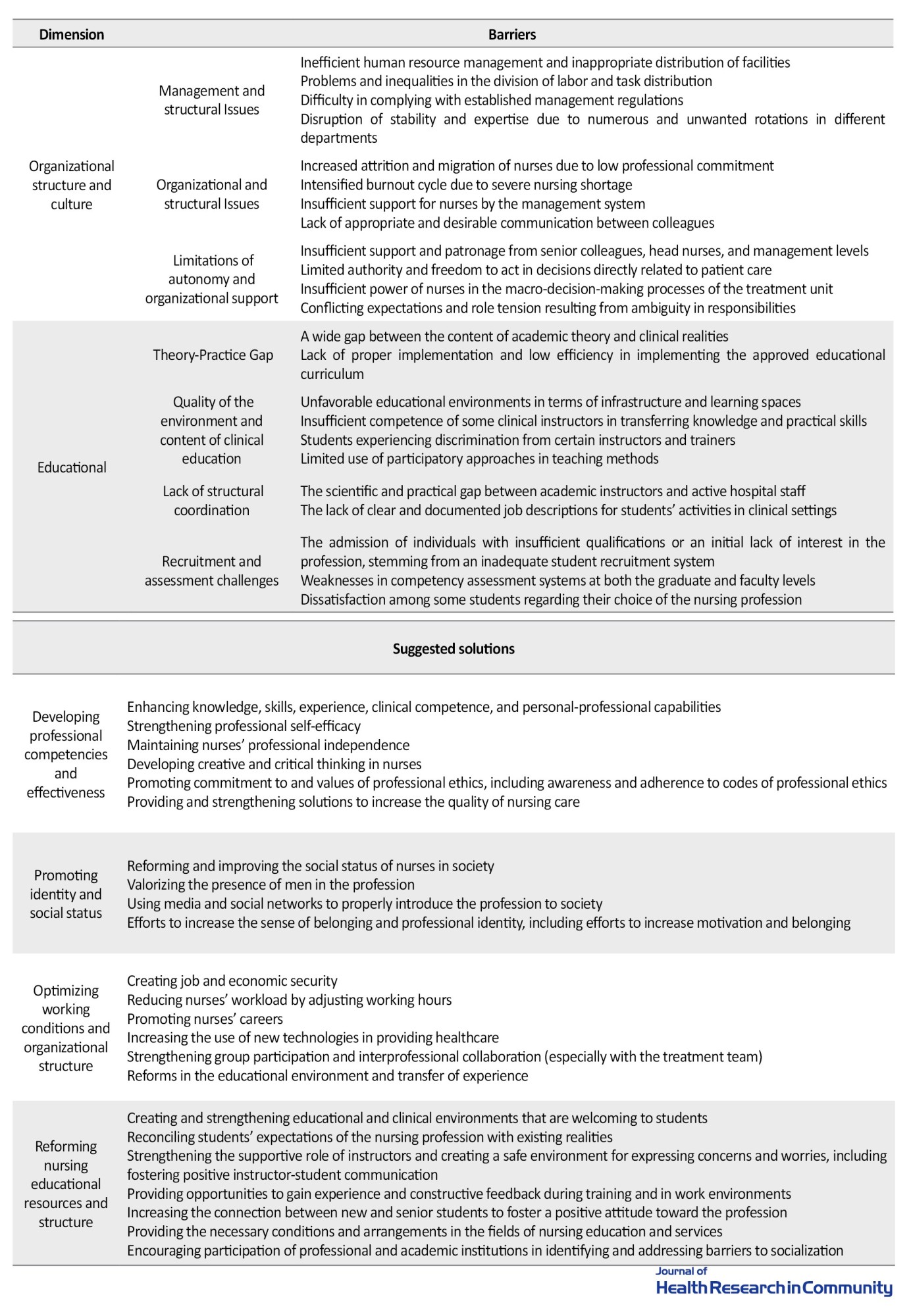
Evidence indicates that the socialization process in nursing is inadequate and does not exhibit the desired level of effectiveness. Therefore, ensuring the successful implementation of this process requires the adoption of targeted intervention strategies. These strategies, presented in detail in Table 1, include strengthening and promoting the concept of professional identity among nurses, valuing and encouraging the effective participation of male human resources in the profession, reinforcing the components of organizational and professional belonging, strategically utilizing social media to introduce and clarify nursing roles, and accelerating the integration of new technologies into professional practice. Collectively, these measures appear essential for facilitating and optimizing the process of professional socialization in this vital field [3, 7].
Conclusion
The attainment of the desired quality and standard of care provided by nurses is intrinsically connected to the social and professional standing of this group of professionals. In this context, the professional socialization of nurses is considered a fundamental requirement for any effective healthcare system, as this process directly and measurably impacts the efficiency and quality of the services rendered. Consequently, from a macro-policy standpoint, healthcare systems must adopt a critical perspective, strategically address the structural, economic, and social barriers confronting the nursing profession, and develop and implement effective intervention strategies to surmount these obstacles. A more profound understanding of professional socialization in nursing, particularly within the cultural and social context of Iran, necessitates serious consideration by the nursing scientific community and health policymakers. Ultimately, accurately identifying existing impediments and formulating practical solutions to enhance this process will pave the way for achieving a range of positive outcomes. These include the successful socialization of nurses, improved quality and safety of nursing services, reduced treatment and care costs, and a significant increase in the satisfaction of patients and their families.
References
The process of socialization is one of the fundamental stages of human development, during which an individual learns the roles, values, and norms necessary for participation in social groups and organizations. This process begins in childhood with learning the rules and culture of the family and continues throughout life, ultimately leading to the formation and consolidation of the individual’s personality [1]. Meanwhile, professional socialization is a specific part of this overall process, during which an individual forms his or her professional identity by learning the knowledge, skills, attitudes, values, beliefs, and ethical standards related to the profession and becomes prepared to effectively perform professional roles [2]. In the nursing profession, professional socialization is a process through which nurses become familiar with their professional roles and responsibilities, internalize the values and goals of the profession, and gradually form a coherent professional identity [1]. It is a dynamic and ongoing process in the nursing profession and has no end [3]. The concept of socialization in the nursing literature dates back to 1958 and earlier [1]. Professional socialization is a vital aspect of the evolution of the nursing profession and serves as the starting point for nursing as a profession [3]. Socialization within the nursing profession has contributed to professional development and the expansion of nursing knowledge and is regarded as a major driver and significant factor influencing the advancement of the profession [4]. Successful realization of this process leads to the acquisition of professional identity and commitment, internalization of values and traditions, improvement in the quality of patient care, a positive professional image, promotion of job satisfaction, demonstration of professional behaviors, enhancement of professional decision-making power, and continuous dynamism within the nursing profession. In contrast, poor professional socialization can have serious consequences, such as reduced quality of care, a negative image of the profession, decreased job satisfaction, increased psychological stress, job abandonment, decreased productivity, and the weakening of ethical and professional values [4, 5]. Globally, the socialization of nurses faces numerous challenges, and the social status of nurses is often not very desirable. This indicates that the socialization process in nursing is not being effectively implemented and faces issues that require attention and targeted policymaking [6]. With the ongoing professionalization of nursing and the increasing need for competent nurses, the importance of professional socialization and the study of factors influencing it have gained more attention than ever before [5]. The most significant obstacles affecting this process exist within the dimensions of the educational system, workplace, and organizational, economic, social, professional, and cultural identity contexts (Table 1) [5-7] .
Evidence indicates that the socialization process in nursing is inadequate and does not exhibit the desired level of effectiveness. Therefore, ensuring the successful implementation of this process requires the adoption of targeted intervention strategies. These strategies, presented in detail in Table 1, include strengthening and promoting the concept of professional identity among nurses, valuing and encouraging the effective participation of male human resources in the profession, reinforcing the components of organizational and professional belonging, strategically utilizing social media to introduce and clarify nursing roles, and accelerating the integration of new technologies into professional practice. Collectively, these measures appear essential for facilitating and optimizing the process of professional socialization in this vital field [3, 7].
Conclusion
The attainment of the desired quality and standard of care provided by nurses is intrinsically connected to the social and professional standing of this group of professionals. In this context, the professional socialization of nurses is considered a fundamental requirement for any effective healthcare system, as this process directly and measurably impacts the efficiency and quality of the services rendered. Consequently, from a macro-policy standpoint, healthcare systems must adopt a critical perspective, strategically address the structural, economic, and social barriers confronting the nursing profession, and develop and implement effective intervention strategies to surmount these obstacles. A more profound understanding of professional socialization in nursing, particularly within the cultural and social context of Iran, necessitates serious consideration by the nursing scientific community and health policymakers. Ultimately, accurately identifying existing impediments and formulating practical solutions to enhance this process will pave the way for achieving a range of positive outcomes. These include the successful socialization of nurses, improved quality and safety of nursing services, reduced treatment and care costs, and a significant increase in the satisfaction of patients and their families.
References
- Lai PK, Lim PH. Concept of professional socialization in nursing. Int EJ of Sci Med Edu. 2012; 6(1):5-31. [Link]
- Valizadeh LE, Zirak MO, Parizad NA. Barriers to professional socialization in nursing: An integrative review. J Nurs Educ. 2016; 5(2):57-65. [Link]
- Salisu WJ, Dehghan Nayeri N, Yakubu I, Ebrahimpour F. Challenges and facilitators of professional socialization: A systematic review. Nurs Open. 2019; 6(4):1289-98. [Link]
- Mousavizadeh N, Ashktorab T, Shabani F. Challenges of nurses professional socialization and solutions. Adv Nurs Midwifery. 2017; 26(95):35. [Link]
- Moon S, Chang SJ. Professional socialization of hospital nurses: A scale development and validation study. BMC Nurs. 2023; 22:2. [Link]
- Darban F, Safarzai E, Tirgary B, Mangolian Shahrebabaki P, Farokhzadian J. [Barriers and Facilitators of Professional Socialization in Nursing: A Systematic Review (Persian)]. Sci J Kurdistan Univ Med Sci. 2020; 25(1):62-75. [DOI:10.52547/sjku.25.1.62]
- Rakkarn J, Visaetsilapanonta P, Jiawiwatkul U, Puckpinyo A. Professional socialization of nurses in humanized care: A qualitative study. Iran J Nurs Midwifery Res. 2023; 28(4):474-81. [DOI:10.4103/ijnmr.ijnmr_78_22]
Send email to the article author
| Rights and permissions | |
 |
This work is licensed under a Creative Commons Attribution-NonCommercial 4.0 International License. |
