

Volume 12, Issue 1 (Spring 2026)
J Health Res Commun 2026, 12(1): 47-59 |
Back to browse issues page


Download citation:
BibTeX | RIS | EndNote | Medlars | ProCite | Reference Manager | RefWorks
Send citation to:


BibTeX | RIS | EndNote | Medlars | ProCite | Reference Manager | RefWorks
Send citation to:
Masoumbeigi H, Ghanizadeh G, Aghajani V, Raei M. Classification and Economic Evaluation of Surplus Medicines Stored in Residential Homes in Tehran in 2023. J Health Res Commun 2026; 12 (1) :47-59
URL: http://jhc.mazums.ac.ir/article-1-1200-en.html
URL: http://jhc.mazums.ac.ir/article-1-1200-en.html


Department of Environmental Health Engineering, School of Public Health, Baqiyatallah University of Medical Sciences, Tehran, Iran. & Health Management Research Center, Life Style Institute, Baqiyatallah University of Medical Sciences,Tehran, Iran.
Full-Text [PDF 4557 kb]
(77 Downloads)
| Abstract (HTML) (495 Views)
Full-Text: (9 Views)
Introduction
Introduction: Due to their impacts on household health, the storage of surplus medicines in homes requires special attention and should be optimized based on demographic and cultural factors. The presence of surplus medicines in homes is a major worldwide problem that can lead to children poisoning, an increase in expired pharmaceutical wastes, and environmental pollution. Several challenges, including non-adherence to treatment, irrational or excessive prescribing, changes in treatment processes, patients’ early recovery, transfer to a hospital, or death are the main causes of excess household medications. These medications ultimately contribute to the production of pharmaceutical waste in the health sector. Identifying these problems and implementing appropriate solutions can improve public health, reduce associated environmental risks, and decrease pharmaceutical waste. The aim of this study was to classify and economically evaluate surplus medicines stored in homes in Tehran in 2023.
Methods
This descriptive-analytic, cross-sectional study included households living in selected areas of Tehran, which were selected purposively. Data were collected using a validated researcher-made questionnaire whose questions were based on the relevant literature. The validity of the tool was determined using the content validity ratio (CVR) and content validity index (CVI). To determine the CVR using the Lawshe method, the questionnaire was sent to 15 experts in pharmacy, environmental health engineering, biostatistics, and epidemiology. The reliability of the collected data was assessed using Cronbach’s alpha coefficient. Based on Cochran›s method, the sample size was calculated as 384 households; however, 437 households were included in the study. To account for possible dropouts during the study and questionnaire completion, the sample size was increased by approximately 30%.
The questionnaire, which contained the desired questions, was completed by the project implementer with the assistance of 510 heads of households selected for this study. Seventy-three questionnaires were incomplete or contained problems and were excluded from the study, leaving 437 heads of households for evaluation, with a response rate of 86% percent. In some cases, citizens were accessed in coordination and cooperation with the municipality, after obtaining permits and holding briefing sessions; in other cases, coordination was conducted with the officials of the boards of directors of residential complexes.
In many cases, with the consent of the head of the household, surplus medicines in citizens’ homes, including medicines with and without an expiration date, were collected in a mixed form and then examined to determine their quantity, classification, and economic value.
First, all drugs were divided into two categories: valid and expired. Then, the collected drugs with expiration dates were classified according to the ATC guidelines into different groups, including respiratory, cardiovascular, dermatological, neuropsychiatric, and digestive drugs; antibiotics; and various vitamins and nutritional supplements. The value of each drug in each group was then determined using the Shaygan Safeware (Pharmacy) software, based on the government rates subject to drug subsidies in 2023.
Data were analyzed using Excel and SPSS software, version 26. Descriptive statistical methods were used to describe the data.
Results
Among the studied households, 94.1% had surplus medicines at home, and approximately 48.7% of households kept medicines until their expiration dates. Of the surplus medicines, 67.2% were valid and intact, whereas 32.8% were expired and defective. The average value of these medicines per household was estimated at approximately 4.5 million IR of Iranian currency (Rials).
The largest quantities surplus medicines were respiratory, digestive, cardiovascular, and neurological drugs, respectively. According to these results, each family in Tehran kept an average of 361 g of surplus medicines at home. Of these medicines, 67.2 percent had not expired and were intact, whereas 32.8 percent were expired and defective.
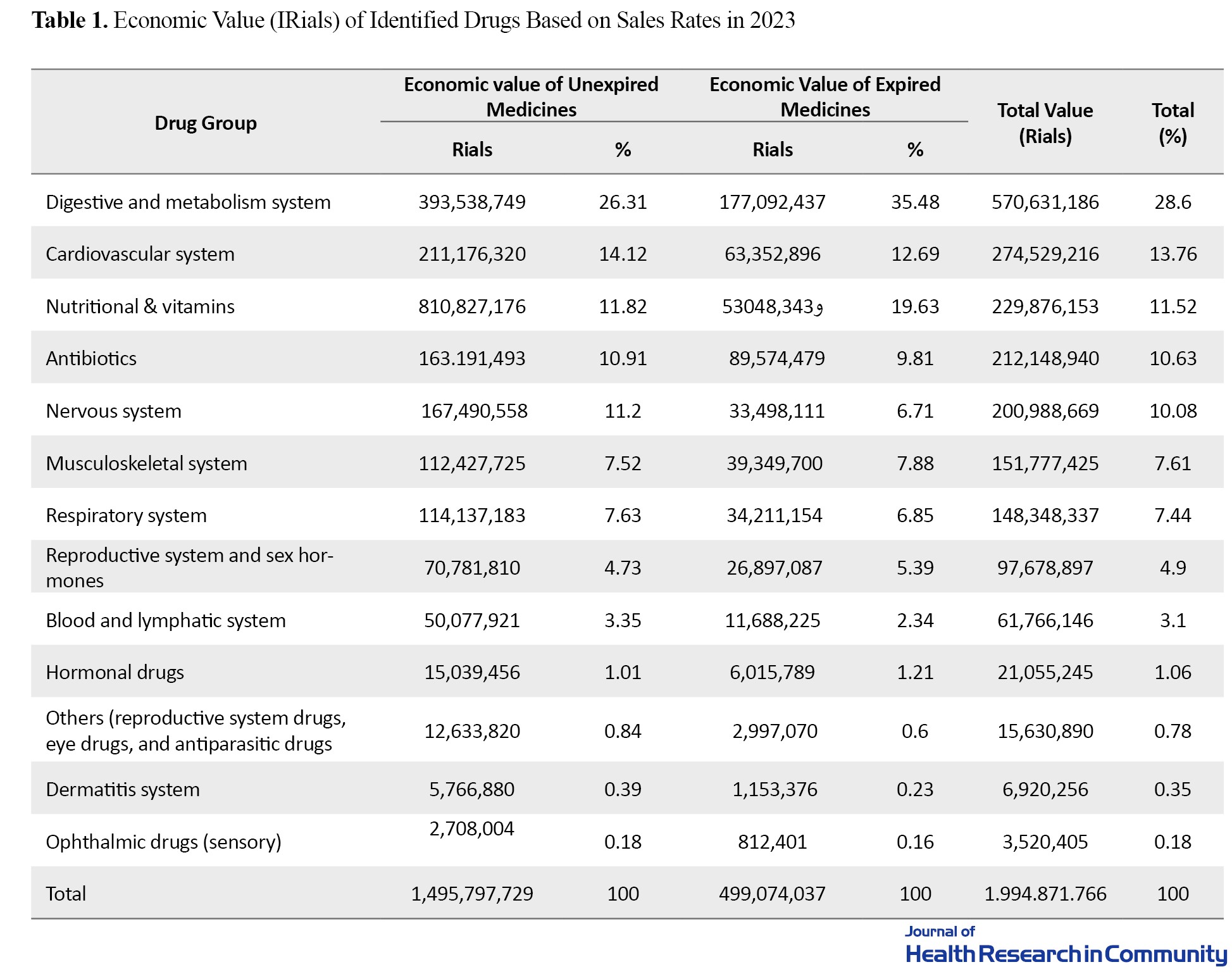
The highest economic values among the surplus medicines were associated with digestive, respiratory, cardiovascular, nutritional and vitamin, and nervous systems drugs (Table 1).
Conclusion
The supply chain is one of the most important and vital resources, playing significant roles in the economy and national security and in maintaining, providing, and improving societal health.
Pharmaceutical waste is classified as special and hazardous chemical waste and must be collected, managed, and ultimately disposed of in accordance with specific regulations and guidelines.
Keeping surplus medicines at home, especially after recovery, was a common behavior in more than 95% of the households under study. These medicines eventually become outdated and contribute to the production of pharmaceutical waste. This issue is influenced by various factors, including the patient’s individual characteristics, the functioning of the healthcare system, and the inappropriate management of the medication cycle.
Understanding these factors and implementing appropriate strategies can help improve societal health, reduce the risks associated with surplus medicines in homes, decrease citizens’ treatment costs, and reduce healthcare system costs in the country.
According to the results of this study, it is necessary to improve public awareness and educate people using all modern tools and technologies through an approach based on information and encouragement. Stakeholders should also revise the guidelines for the procurement, storage, distribution, and use of medicines. These measures can protect environmental resources from threats arising from the improper disposal of medicines and safeguard public health by ensuring compliance with health requirements related to the optimal management of surplus medicines.
Educational and cultural interventions to promote the proper management of medication use at the household level, as well as reviews of drug-prescribing and sales systems to reduce the amount of surplus medication, should be considered.
Ethical Considerations
Compliance with ethical guidelines
The study protocol was approved by the Ethics Committee of Baqiyatallah University of Medical Sciences (Code: IR.BMSU.REC.1402.032).
Funding
This article was extracted from a master’s thesis in environmental health, funded by Baqiyatallah University of Medical Sciences.
Authors contributions
All authors contributed equally to study design, data collection, data analysis, and manuscript drafting and approved the final version.
Conflicts of interest
The authors declared no conflicts of interest.
Acknowledgements
The authors gratefully acknowledge the cooperation of the Department of Environmental Health, the Vice-Chancellor for Research and Technology, and the Student Research Committee of Baqiyatallah University of Medical Sciences for their cooperation and support.
Introduction: Due to their impacts on household health, the storage of surplus medicines in homes requires special attention and should be optimized based on demographic and cultural factors. The presence of surplus medicines in homes is a major worldwide problem that can lead to children poisoning, an increase in expired pharmaceutical wastes, and environmental pollution. Several challenges, including non-adherence to treatment, irrational or excessive prescribing, changes in treatment processes, patients’ early recovery, transfer to a hospital, or death are the main causes of excess household medications. These medications ultimately contribute to the production of pharmaceutical waste in the health sector. Identifying these problems and implementing appropriate solutions can improve public health, reduce associated environmental risks, and decrease pharmaceutical waste. The aim of this study was to classify and economically evaluate surplus medicines stored in homes in Tehran in 2023.
Methods
This descriptive-analytic, cross-sectional study included households living in selected areas of Tehran, which were selected purposively. Data were collected using a validated researcher-made questionnaire whose questions were based on the relevant literature. The validity of the tool was determined using the content validity ratio (CVR) and content validity index (CVI). To determine the CVR using the Lawshe method, the questionnaire was sent to 15 experts in pharmacy, environmental health engineering, biostatistics, and epidemiology. The reliability of the collected data was assessed using Cronbach’s alpha coefficient. Based on Cochran›s method, the sample size was calculated as 384 households; however, 437 households were included in the study. To account for possible dropouts during the study and questionnaire completion, the sample size was increased by approximately 30%.
The questionnaire, which contained the desired questions, was completed by the project implementer with the assistance of 510 heads of households selected for this study. Seventy-three questionnaires were incomplete or contained problems and were excluded from the study, leaving 437 heads of households for evaluation, with a response rate of 86% percent. In some cases, citizens were accessed in coordination and cooperation with the municipality, after obtaining permits and holding briefing sessions; in other cases, coordination was conducted with the officials of the boards of directors of residential complexes.
In many cases, with the consent of the head of the household, surplus medicines in citizens’ homes, including medicines with and without an expiration date, were collected in a mixed form and then examined to determine their quantity, classification, and economic value.
First, all drugs were divided into two categories: valid and expired. Then, the collected drugs with expiration dates were classified according to the ATC guidelines into different groups, including respiratory, cardiovascular, dermatological, neuropsychiatric, and digestive drugs; antibiotics; and various vitamins and nutritional supplements. The value of each drug in each group was then determined using the Shaygan Safeware (Pharmacy) software, based on the government rates subject to drug subsidies in 2023.
Data were analyzed using Excel and SPSS software, version 26. Descriptive statistical methods were used to describe the data.
Results
Among the studied households, 94.1% had surplus medicines at home, and approximately 48.7% of households kept medicines until their expiration dates. Of the surplus medicines, 67.2% were valid and intact, whereas 32.8% were expired and defective. The average value of these medicines per household was estimated at approximately 4.5 million IR of Iranian currency (Rials).
The largest quantities surplus medicines were respiratory, digestive, cardiovascular, and neurological drugs, respectively. According to these results, each family in Tehran kept an average of 361 g of surplus medicines at home. Of these medicines, 67.2 percent had not expired and were intact, whereas 32.8 percent were expired and defective.
The highest economic values among the surplus medicines were associated with digestive, respiratory, cardiovascular, nutritional and vitamin, and nervous systems drugs (Table 1).
Conclusion
The supply chain is one of the most important and vital resources, playing significant roles in the economy and national security and in maintaining, providing, and improving societal health.
Pharmaceutical waste is classified as special and hazardous chemical waste and must be collected, managed, and ultimately disposed of in accordance with specific regulations and guidelines.
Keeping surplus medicines at home, especially after recovery, was a common behavior in more than 95% of the households under study. These medicines eventually become outdated and contribute to the production of pharmaceutical waste. This issue is influenced by various factors, including the patient’s individual characteristics, the functioning of the healthcare system, and the inappropriate management of the medication cycle.
Understanding these factors and implementing appropriate strategies can help improve societal health, reduce the risks associated with surplus medicines in homes, decrease citizens’ treatment costs, and reduce healthcare system costs in the country.
According to the results of this study, it is necessary to improve public awareness and educate people using all modern tools and technologies through an approach based on information and encouragement. Stakeholders should also revise the guidelines for the procurement, storage, distribution, and use of medicines. These measures can protect environmental resources from threats arising from the improper disposal of medicines and safeguard public health by ensuring compliance with health requirements related to the optimal management of surplus medicines.
Educational and cultural interventions to promote the proper management of medication use at the household level, as well as reviews of drug-prescribing and sales systems to reduce the amount of surplus medication, should be considered.
Ethical Considerations
Compliance with ethical guidelines
The study protocol was approved by the Ethics Committee of Baqiyatallah University of Medical Sciences (Code: IR.BMSU.REC.1402.032).
Funding
This article was extracted from a master’s thesis in environmental health, funded by Baqiyatallah University of Medical Sciences.
Authors contributions
All authors contributed equally to study design, data collection, data analysis, and manuscript drafting and approved the final version.
Conflicts of interest
The authors declared no conflicts of interest.
Acknowledgements
The authors gratefully acknowledge the cooperation of the Department of Environmental Health, the Vice-Chancellor for Research and Technology, and the Student Research Committee of Baqiyatallah University of Medical Sciences for their cooperation and support.
References
- Iqbal S, Jokela P, Hammar T, Nilsson AL. Sustainable healthcare systems. A holistic perspective on the use and impact of medication management robots in home healthcare. Scand J Inf Syst. 2021; 33(2):6. [Link]
- Pereira F, Bieri M, Martins MM, Del Río Carral M, Verloo H. Safe Medication Management for Polymedicated Home-Dwelling Older Adults after Hospital Discharge: A Qualitative Study of Older Adults, Informal Caregivers and Healthcare Professionals’ Perspectives. Nurs Rep. 2022; 12(2):403-23. [DOI:10.3390/nursrep12020039] [PMID]
- Sorensen L, Stokes JA, Purdie DM, Woodward M, Roberts MS. Medication management at home: Medication-related risk factors associated with poor health outcomes. Age Ageing. 2005; 34(6):626-32. [DOI:10.1093/ageing/afi202] [PMID]
- Horvat M, Eržen I, Vrbnjak D. Barriers and Facilitators to Medication Adherence among the Vulnerable Elderly: A Focus Group Study. Healthcare (Basel). 2024; 12(17):1723. [DOI:10.3390/healthcare12171723] [PMID]
- Zargarzadeh AH, Tavakoli N, Hassanzadeh A. A survey on the extent of medication storage and wastage in urban Iranian households. Clin Ther. 2005; 27(6):970-8. [DOI:10.1016/S0149-2918(05)00122-0] [PMID]
- Asgarirad H, Rezaei Z. [Elimination methods of pharmaceutical waste in pharmacies and homes (Persian)]. J Mazandaran Univ Med Sci. 2015; 25(129):149-52. [Link]
- Lee S, Schommer JC. Medication Use and Storage, and Their Potential Risks in US Households. Pharmacy (Basel). 2022; 10(1):27. [DOI:10.3390/pharmacy10010027] [PMID]
- Tabassum R, Hussain SS, Arif SH. Drug Storage and Self-medication Practices in Kashmir, India: A Cross-sectional Study. J Clin Diag Res. 2022; 16(10).5-12. [DOI:10.7860/JCDR/2022/56886.17091]
- Suryawanshi S, Dhande PP, Dawane JS, Bhavsar A. Storage, Reuse and Disposal Practices of Home - Stored Medicines in Urban Households in Pune, India. Natl J Community Med. 2024; 15(02):127-33. [DOI:10.55489/njcm.150220243449]
- Romanelli L, Lucente F. Analysis of medicines returned to pharmacies for disposal and estimation of the cost due to medicine wasting. Explor Res Clin Soc Pharm. 2022; 5:100133. [DOI:10.1016/j.rcsop.2022.100133] [PMID]
- Ekedahl AB. Reasons why medicines are returned to Swedish pharmacies unused. Pharm World Sci. 2006; 28(6):352-8. [DOI:10.1007/s11096-006-9055-1] [PMID]
- Foroutan B, Foroutan R. Household storage of medicines and self-medication practices in south-east Islamic Republic of Iran. East Mediterr Health J. 2014; 20(9):547-53.[DOI:10.26719/2014.20.9.547] [PMID]
- Soudi R, Sadeghieh Ahari S, Moradi Asl E, Soudi Z. Study of Drug Storage in Meshkin Shahr Households in 2014. J Health. 2017; 8(4):408-15. [Link]
- Hamdollahzadeh A, Ghafarzadeh J, Nabilou B, Amirzadeh J, Davodi J, Yusefzadeh H. [Unused medicines in Urmia households in 2016 (Persian)]. Nurs Midwifery J. 2018; 16(9):671-7. [Link]
- Nasiri Asl M. Home drug store in minodar region of Qazvin (2006). J Inflamm Dis. 2024; 11(2):e155297. [Link]
- Moemen M. [Survey of excess drugs beyond consumption present in households of Khorramabad city (Persian)] . Yafte. 2003; 4(12):22-7. [Link]
- Hussain R, Rashidian A, Hafeez A. A Survey On Household Storage Of Medicines In Punjab, Pakistan. J Ayub Med Coll Abbottabad. 2019; 31(1):90-7. [Link]
- Dadgarmoghaddam M, Imenshahidi M, Aliabadi A, Baseri H, Khajedaluee M. Unused Medicines in Households. Razavi Int J Med. 2016; 4(1):e34351. [Link]
- Salgado MAR, Salvador MR, Baldoni AO, Thomé RG, Santos HB. Evaluation of the potential environmental risk from the destination of medicines: An epidemiological and toxicological study. Daru. 2021; 29(1):61-71. [DOI:10.1007/s40199-020-00383-4] [PMID]
- Masoumbeigi H, Sadat RM, Ghanizadeh G. [Assessment of the Security Status of Drinking Water Facilities of Hashtgerd with Passive Defense Approach (Persian)]. J Police Med. 2021; 10(3):167-76. [Link]
- Teni FS, Surur AS, Belay A, Wondimsigegn D, Gelayee DA, Shewamene Z, et al. A household survey of medicine storage practices in Gondar town, northwestern Ethiopia. BMC Public Health. 2017; 17(1):238. [DOI:10.1186/s12889-017-4152-8] [PMID]
- Chung S, Brooks B. Identifying household pharmaceutical waste characteristics and population behaviors in one of the most densely populated global cities. Resour Conserv Recycl. 2019; 140:267-77. [DOI:10.1016/j.resconrec.2018.09.024]
- Mundzik-Janczarska E, Stanczak A. The analysis of unused medications and other products returned by patients to selected public pharmacies in Poland. Pol J Public Health. 2023; 133:41-8. [DOI:10.12923/2083-4829/2023-0009]
- Ogbewele E, Mbata A, Nwosu N. Optimizing pharmaceutical inventory management: A global framework for efficiency and cost reduction. Int J Manag Entrep Res. 2024; 6(10):3357-71. [DOI:10.51594/ijmer.v6i10.1638]
- Mobrad AM, Ahmad F, Saleh SA, Abdul A, Rammah A, Syed W, et al. Unused and Expired Medicines: Investigating the Knowledge and Practice of General Community. Lat Am J Pharm. 2020; 39(3):526-31. [Link]
- Okoro RN, Peter E. Household Medicines Disposal Practices in Maiduguri, North-Eastern Nigeria. J Health Rep Technol. 2019; 6(1):e97085. [DOI:10.5812/ijhls.5709]
- El-Hamamsy M. Unused medications: How cost and how disposal of in Cairo, EGYPT. Int J Pharm Stud Res. 2011; 2(1):21–7.[Link]
- Molla-Mahmoudi M, Monazami-Tehrani G, Shokri-Khubestani M, Hassani M, Bahramzadeh AH. [Investigating the Effects of Pharmaceutical Wastes on the Environment and Human Health (Systematic review) (Persian)]. J Saf Promot Inj Prev. 2018; 6(1):31-42. [DOI:10.22037/meipm.v6i1.22146]
- Khansa N, Gazy AK, El-Lakany A, Domiati S. Assessment of the knowledge, attitude, and practice towards expired drug disposal among the community in Beirut City, Lebanon. BAU J Health Wellbeing. 2023; 5(2):Article 8. [DOI:10.54729/2789-8288.1188]
- Abad-Grillo T, McNaughton-Smith G. Chemical Upcycling of Expired Pharmaceuticals as a Source of Value-Added Chemicals for Organic Synthesis and Medicinal Chemistry. Molecules. 2024; 29(20):4811. [DOI:10.3390/molecules29204811] [PMID]
- Alanazi MQ, Alkhadhairi EK, Alrumi WH, Alajlan SA. Reducing pharmaceutical and non-pharmaceutical inventory Waste in Tertiary Hospital: Impact of ABC-VEN Analysis in a Zero-Waste Strategy Over 7 Years. Risk Manag Healthc Policy. 2024; 17:2659-75. [DOI:10.2147/RMHP.S467230] [PMID]
Type of Study: Research(Original) |
Subject:
Environmental Health
Send email to the article author
| Rights and permissions | |
 |
This work is licensed under a Creative Commons Attribution-NonCommercial 4.0 International License. |
